The cases
A community hospital holds its Autumn Open House and Charity Sale on a Saturday in October. By evening, three matters need solving. In Case One, a visitor files a claim that the rehabilitation unit's gait training mat tripped him, and the corridor's tracks in the dust film tell a different story than his report does. In Case Two, the chief medical officer's briefcase vanishes from the committee room during a one-hour recess, and the building's records hold the hour it travelled. In Case Three, four visitors lose purses and wallets across the open house day, the closing search finds none of them, and the answer sits in a service corridor visitors never enter.
The driving questions
Do the corridor's tracks support the trip claim as stated?
Who took the case, and how did it travel?
Who took the items, and where are the items now?
What students do
Each case runs on its own, and the cases run in any order. Groups read the case file and the interviews, then request evidence cards from the evidence keeper as their questions call for them. Every card carries its release condition in its header, so students can see what a card answers before they ask. Each card is logged before it is used. Students work from the shared Hospital Suspect File: nine staff profiles holding fingerprints, DNA records, trace panels, shoe prints and tracks, handwriting samples, and carried items. Each case draws on five of the nine profiles. Each case closes on a claim page that asks for the claim, the evidence that supports it, the reasoning that joins the lines, and the strongest counterclaim. The three cases hold 42 evidence cards in total, 14 in each case.
What is included
1. Complete Pack: Hospital-Mystery-Cases-COMPLETE-Pack-v4-2026-11-21.pdf, 73 pages. The Student Case Files and the Teacher Pack in one file, in pack order. The student part runs 52 pages: how the cases work, five reference pages that teach the evidence disciplines, all three case files with their suspects and interviews, all 42 evidence cards, the evidence logs, and the claim pages. The teacher part runs 21 pages: running the cases, grade band and standards, the If They Ask facilitator guide, the solution, and the interview claim key for each case, the visuals and records pages, and Scoring the Claim Pages.
2. Hospital Suspect File: Hospital-Suspect-File-Profiles-1-9-v4-2026-11-21.pdf, 41 pages. All nine hospital suspect profiles as its own file, printed once for each class set.
3. Teacher Key: Hospital-Suspect-File-Teacher-Key.pdf, 14 pages. The formatted teacher-side key for the nine profiles, for the teacher only.
4. Support Slides companions: a keeper deck for each of the three cases, with the evidence cards as slides, and an Access Sheet carrying the Google Slides force-copy link for each deck. A combined companion deck holds all three cases' cards in a single file.
The three cases are also sold as singles at $8 each. Each single carries its own case file with its teacher pages, the Hospital Suspect File, and its Support Slides deck with Access Sheet.
Google Slides access
Open a case's Access Sheet and follow the printed link. Google Slides offers a copy of the deck, which saves to your Drive. The deck file in the download is the backup copy of the same deck. The slides are images, so the text on a slide cannot be edited.
Printing and setup
Print each case's case pages once for each student, without its evidence card pages. Print the evidence card pages once for the keeper and cut each page on the dashed line. Print the Hospital Suspect File once for each class set; one set serves all three cases. Print the teacher material and the Teacher Key once, for the teacher only. A student evidence keeper holds the cards and releases each card when a group's questions call for it. Each case runs in one to two class periods. The cards are shared in print: posting the card file to a class platform hands every student every card at once, and the keeper's gating is gone.
Standards note
Forensic science has no formal NGSS performance expectation set. The Teacher Pack gives the grade band, the assembled expectation, the alignment by practice, and the prerequisites for the cases. The work is nonlinear and inquiry-based: students build the account of the day from evidence they request, log, and weigh, and each case ends in a claim they defend at the reveal.

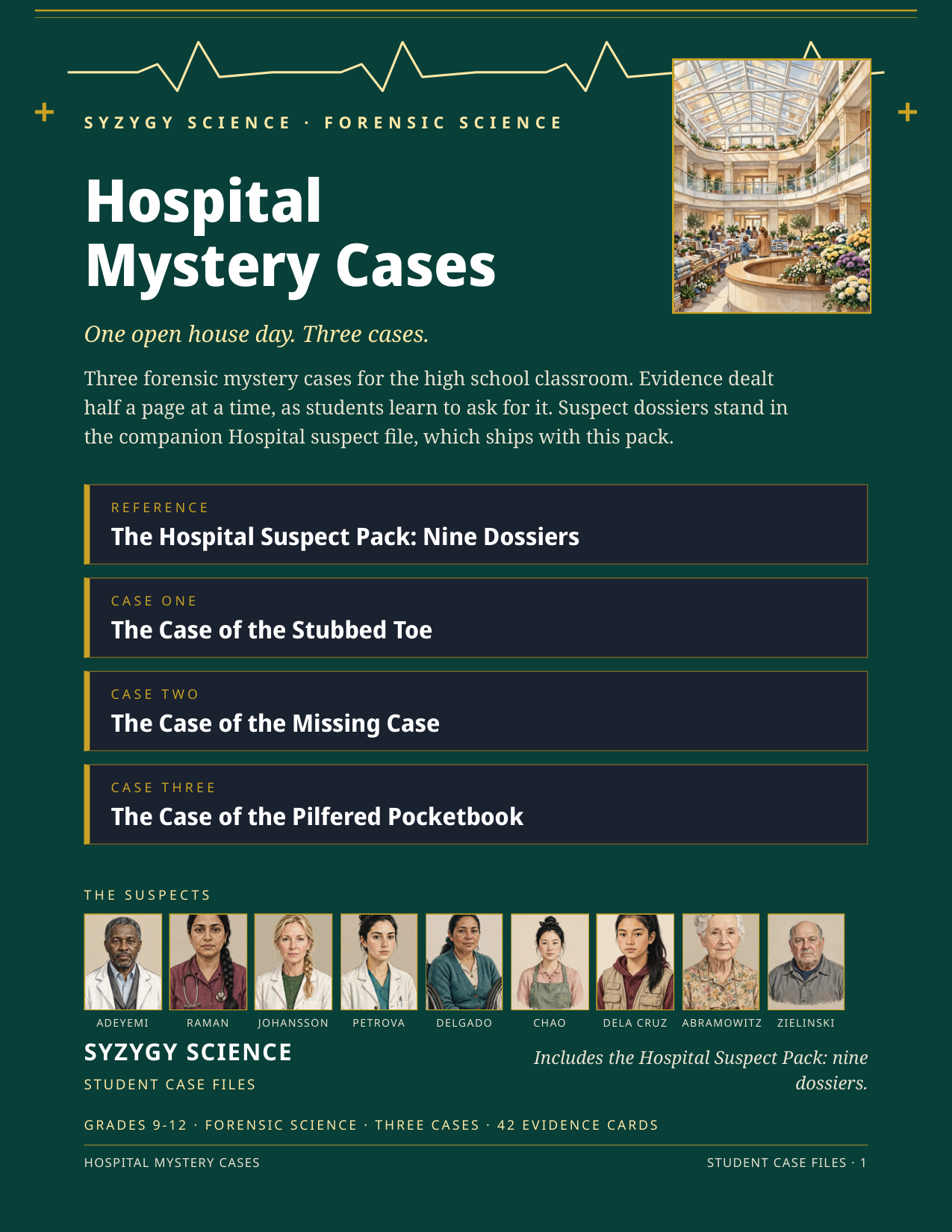 Image 1 of 7
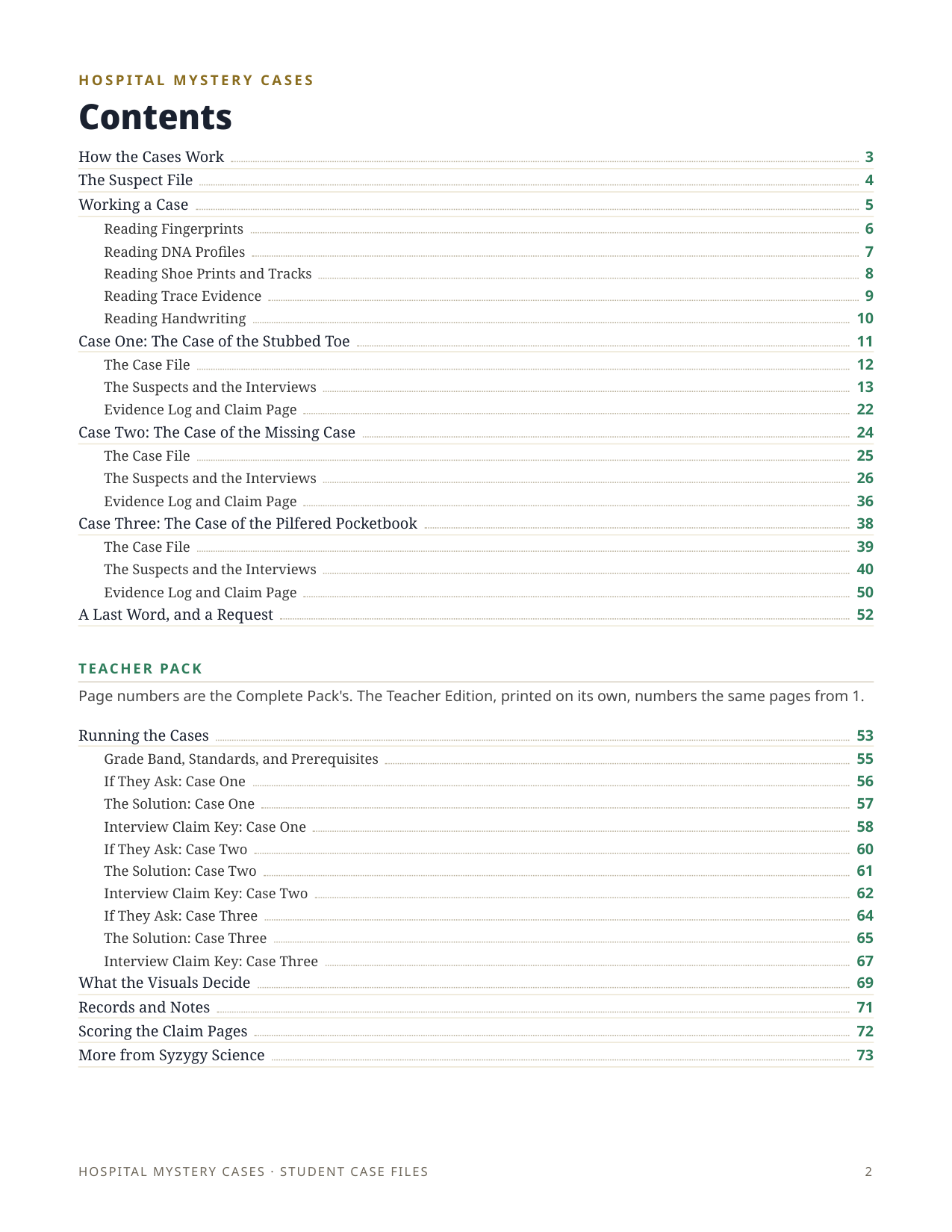 Image 2 of 7
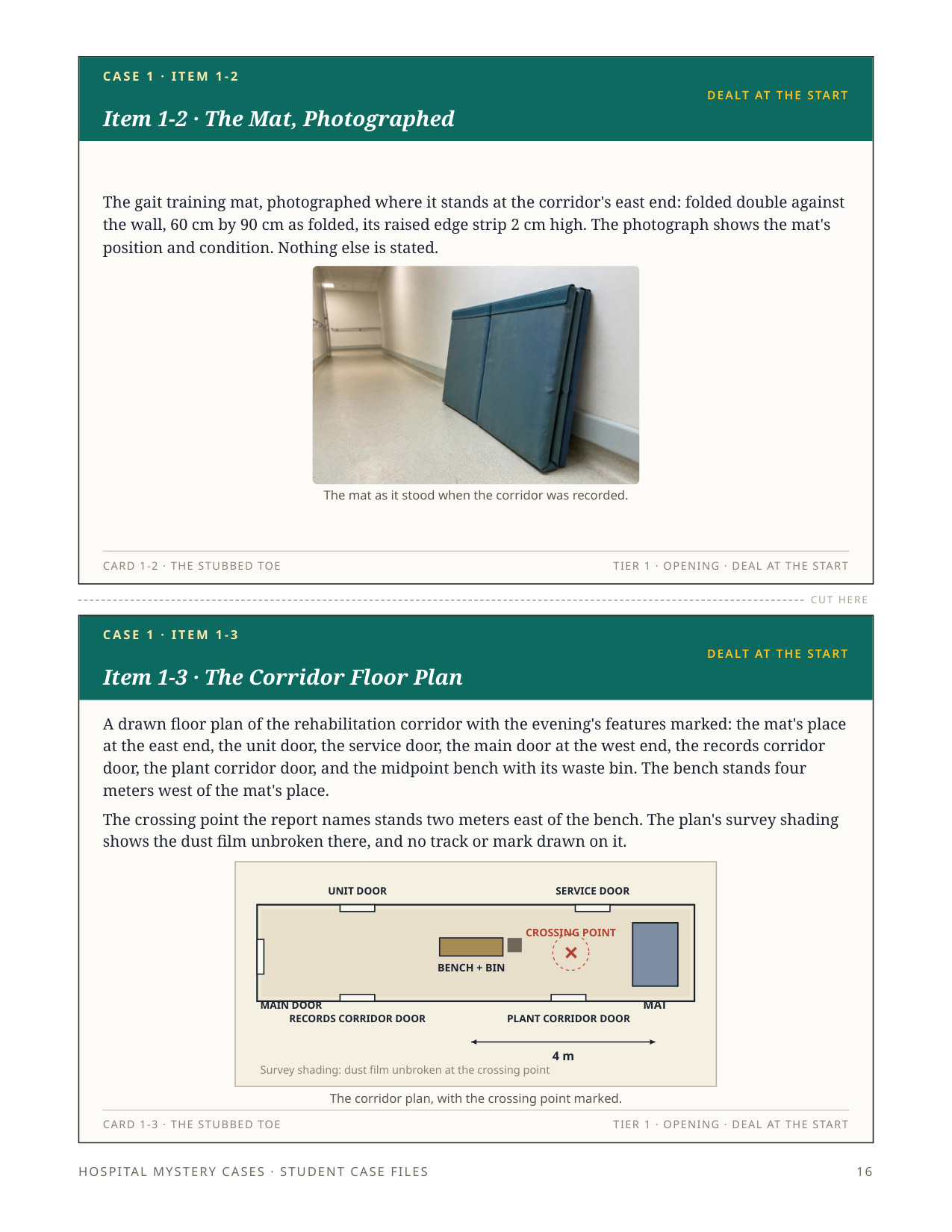 Image 3 of 7
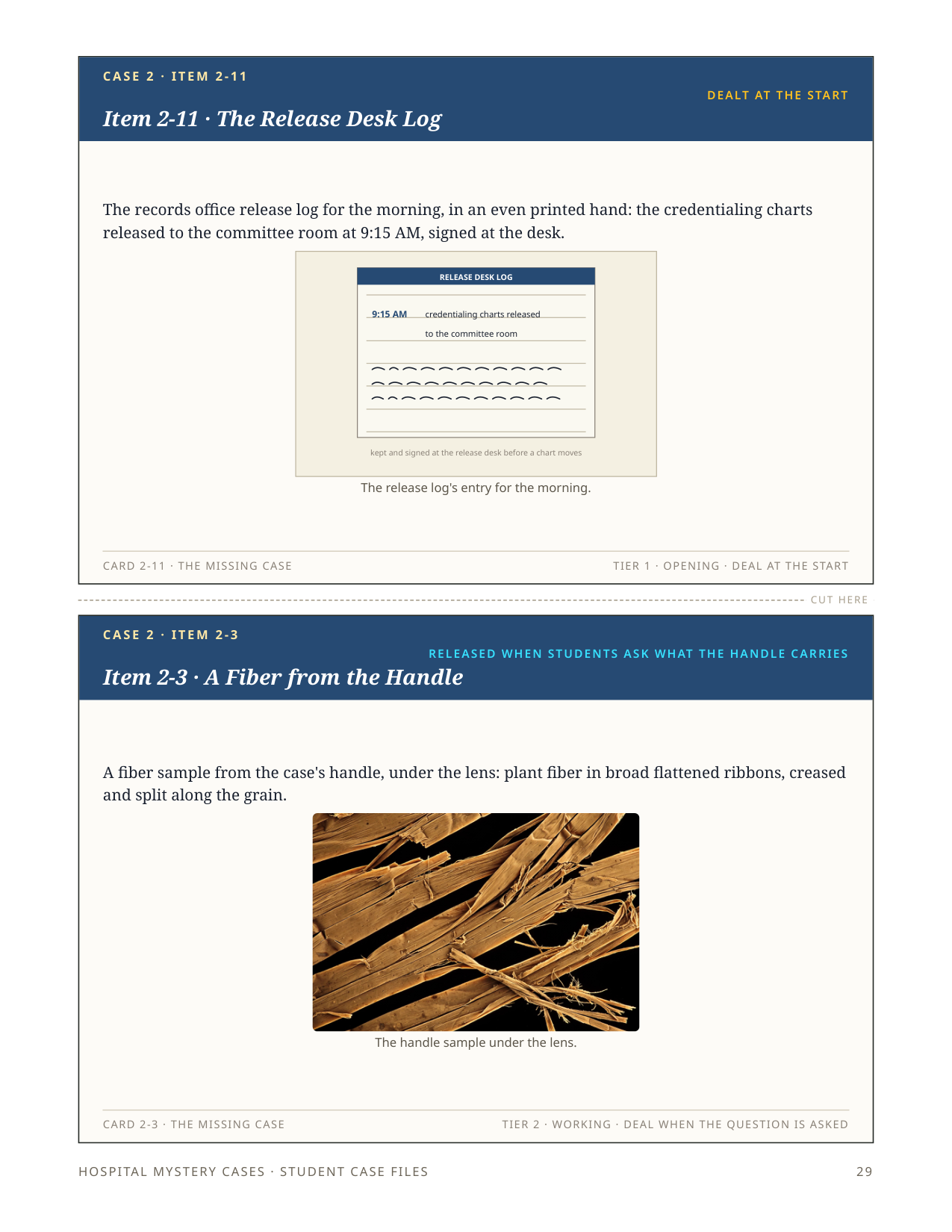 Image 4 of 7
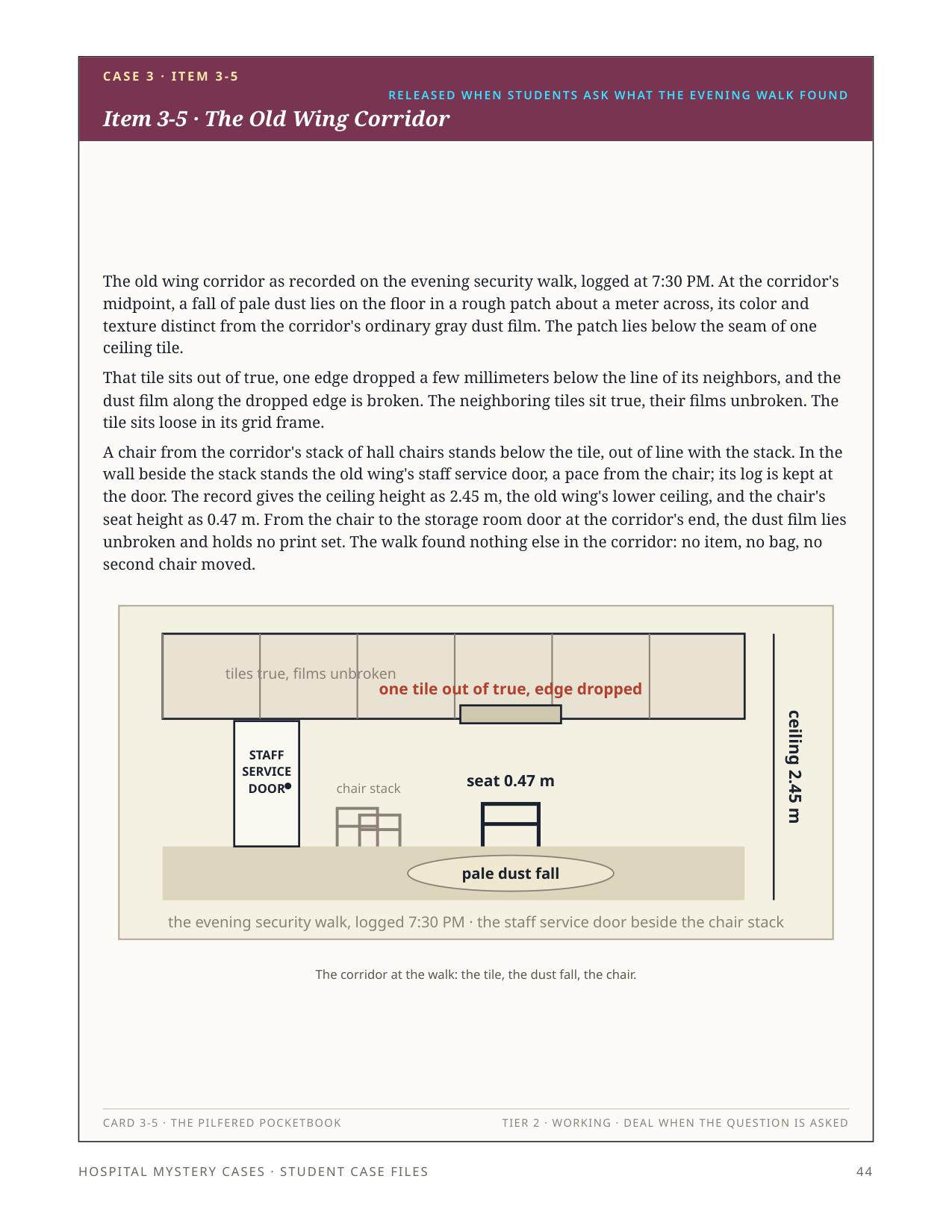 Image 5 of 7
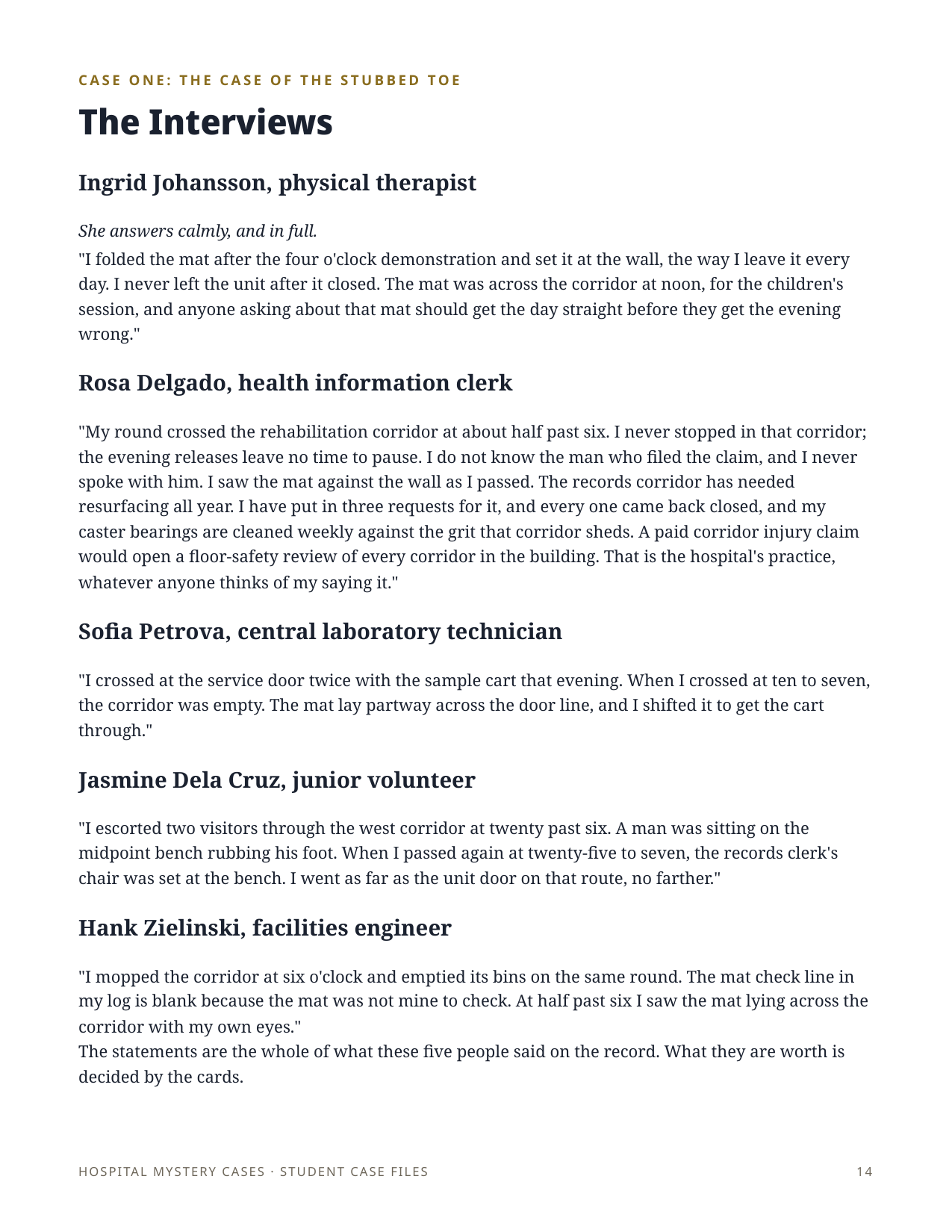 Image 6 of 7
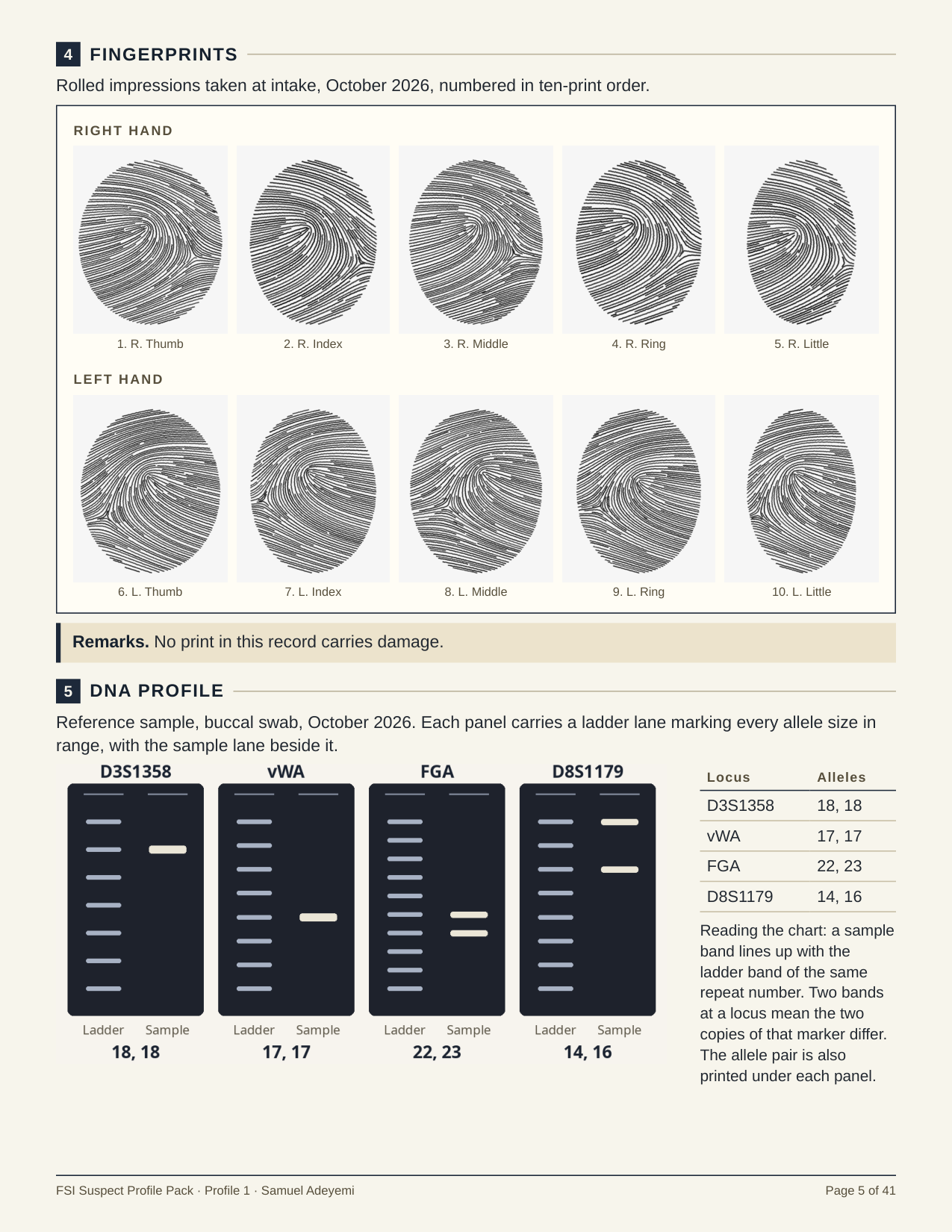 Image 7 of 7